So we’ve been reviewing Norway’s resource policy they enacted in the seventies and wanted to see what would happen if Australia had done the same.
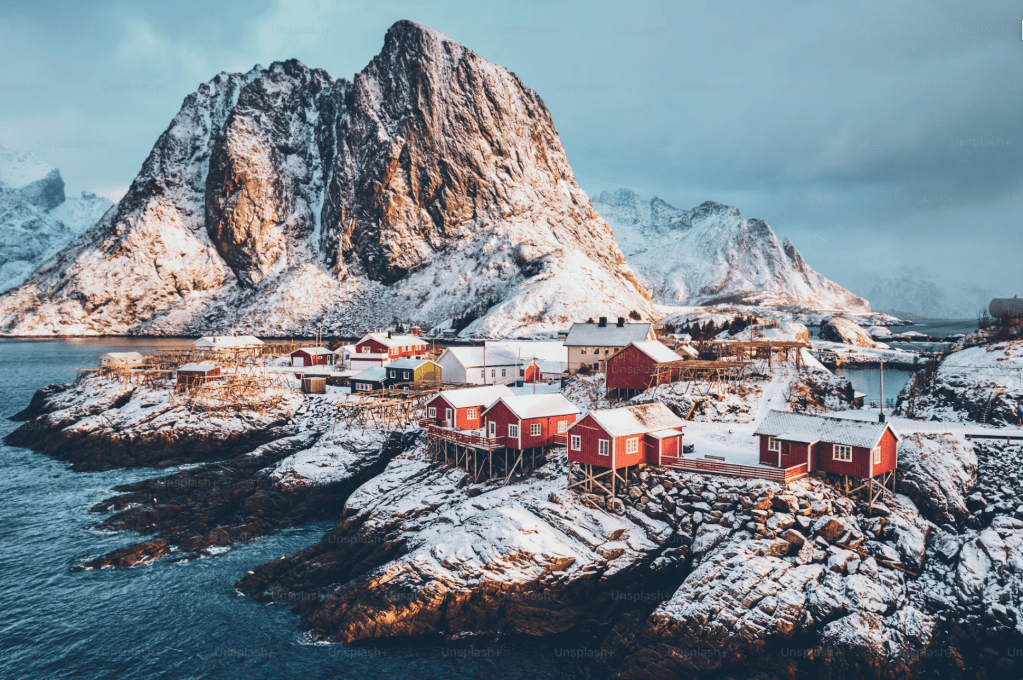
I know reflecting on the past isn’t always the way forward but it does teach us a valuable lesson if we decide to go forward with the lesson today.
Lost Ownership
- Norway bought 100% of key oil companies early on, later moderating to 67% ownership in 2001
- Australia left its resources to private hands (local and foreign). If the government had acquired a similar stake in mining, oil and gas companies, it could have captured ~$2 trillion in extra revenue over the past fifty years from dividends and profit-sharing – this is $2 trillion extra above what we did take in.
Missing Compounding via a Sovereign Fund
- Norway didn’t just take revenue – it invested it in the ‘Oil Fund’ which now totals over USD $2 trillion.
- Australia could have done the same, although I would suggest an alternative model where profit goes towards both today’s generation and tomorrow’s generation. Ownership where 50% of profits go to the budget, and then 50% to the Sovereign Wealth Fund (SWF). Of the SWF’s portion, of their annual returns, 65% is reinvested and 35% is allocated to the annual federal budget. This optimises long term returns, once fiscally independent the allocation percentages can be altered.
- Compounding over decades would have created a permanent, massive public revenue source, potentially funding infrastructure, health, education and even reducing taxes.
The impact on the Public Budget
- Australia’s current federal budget is ~$735Billion/year and growing.
- A Norway inspired style fund could have, by 2025, added hundreds of billions annually to the budget
- Even after resources run out the fund would continue to generate returns creating fiscal independence from natural resource depletion
Realistic Constraints
- Resource depletion: Australia’s oil and gas could run out by 2065, iron ore by 2090 and coal by 2150. Without a fund, once resources are gone, the public loses that revenue permanently.
- Norway avoided this by transforming finite resources into an eternal financial asset. Australia didn’t, but we still have time to.
The Process
- Norway didn’t mandate or use government force to takeover the companies, it used the free market to buy the companies through the stock exchange
- Australia could follow a similar method, in fact, if Australia were to put just 50% of its current mining royalties and mining company tax profits towards a 67% buyout of resource companies operating in Australia it would take 4-6 years to complete the purchasing process
- Once purchased Australia is now receiving 67% of profits, 33% still goes towards those shares owned by institutional and retail investors and superannuation funds
- What this means, we have to use some hypothetical figures because no one knows the future, but our assumption is that 67% would equate to approximately $268 billion in retained profits and royalties in 2031 (assuming we initiated this process in 2025 – unlikely)
- So $134 billion would go directly to the budget (for today’s generation) and $134 billion would go towards the SWF, which will help next years budget and tomorrows generation.
- The 10-year return on the Future on a per annum basis is 8%, we’re going to assume this rate of return for the SWF. That would return $10.7 billion in the year, $7B of which would be reinvested into the SWF and $3.7B would be directly contributed to the annual budget
- So it’s now 2032 and Australia rakes in another ~$270billion in retained profits and royalties, again the process repeats, except this time, the SWF gains another $135billion to grow to $269 billion, but has the added $10.7B as well, $279.7 Billion in total, this year, at an average 8% it earns $22.38B of which $14.5 billion will be reinvested and $7.8B will be added to the budget on top of the $135B from the retained earnings. This process continues indefinitely until resources run out.
- Continue this process and this is the revenue additions, here are the assumptions, that an annual growth rate of the fund at 8% is achievable as an average, that population growth will average at 1.8%, that inflation will average at 2% and this will affect the budget needs by 2% every year.
| SWF Capital | Total Budget Contributions (SWF returns + resources) | Contribution to budget per person | Budget per person + yearly inflation 2% | Percent of Budget Covered by SWF/Mining Resources | |
| 2031 | 160,800,000,000 | 111,702,400,000 | 3879 | 26700 | 14.53% |
| 2041 | 2,587,281,719,480 | 209,668,951,283 | 6091 | 32547 | 18.71% |
| 2051 | 7,265,585,462,319 | 379,096,075,344 | 9,213 | 39675 | 23.22% |
| 2061 | 15,864,361,433,382 | 669,061,364,612 | 13603 | 48363 | 28.13% |
| 2071 | 26,886,229,982,129 | 752,921,639,500 | 12807* | 58955 | 21.72% |
| 2081 | 44,638,529,836,387 | 1,250,016,060,482 | 17788 | 71865 | 24.75% |
| 2091 | 74,111,343,583,887 | 2,075,293,280,031 | 24707 | 87604 | 28.20% |
| 2101 | 123,042,601,598,383 | 3,445,417,703,999 | 34317 | 106788 | 32.14% |
| 2111 | 204,278,777,792,361 | 5,720,093,617,030 | 47664 | 130174 | 36.62% |
| 2121 | 339,147,505,533,075 | 9,496,498,612,981 | 66202 | 158682 | 41.72% |
| 2131 | 563,056,759,761,560 | 15,766,060,930,785 | 91950 | 193432 | 47.54% |
*2071 drop in per person contribution, we’ve run out of oil and majority of gas revenue streams, these finite resources are depleted
So these numbers may seem huge, but 1 million dollars was huge in 1920 and today it wouldn’t even afford a median house price in Sydney, in 100 years time with growth and inflation, you can see that even the budget expense per person grows from 26700 today to 193432 to just maintain our standards of living, not to increase.
By 2131 the majority of the budget contributions from this scheme are coming from the Sovereign Wealth Fund returns, 15.765 Trillion per annum, and even at that rate the fund is only covering 47.54% of budget needs! At 1.8% population growth Australia would have over 170million people in 2131 – huge! What this means for current Australian’s, we’ve gained extra budget funds today, 14% of our budget will be covered by resources, quickly growing to almost 30% by 2061. For future Australians, almost 50% of their budget would be covered.
When would Australia become fiscally independent from this fund? By my very crude estimates it would be 2188, in 2188 Australia could be a land where there’s no corporate tax and no income tax and living solely off our foresight to establish a self-growing SWF. I would still recommend a GST stay in place for extra revenue from both citizens and foreign visitors. Do we care about the future? I do, and I think your future ancestors will be glad you did this. Even allowing space for the Australian public to own a share in AI and Robotics as automation kicks in to the future. We’d be about ten years behind in purchasing the early investment stages, but at least we’d be converting our resources into owning our future, not being owned by foreign powers.
How does this compare to today? From mining in 2023/24, the budget received $59 billion, so by 2031 you’re almost doubling that contribution already.
Not the only way to add value to Australia’s economy
But that’s not the only way to add value to Australia’s economy. We ship most, if not all, of our resources out raw and unprocessed. So let’s look at an example where we could, as a country, increase our revenues further.
Bauxite! We currently ship this out at $90 a tonne. $9-18 profit per tonne. Not much. And we ship out over 100 Million Tonnes of Bauxite, what is this used for? Well it’s used to be processed and transformed into Aluminium, which is then sold by other countries to everyone, including us, at USD$2400 a tonne. If we invested our returns in processing in house, we’d be capturing a revenue stream of $52.8Billion where we’re profiting between US$250-500/tonne of aluminium, or clear profit of US$5.5 Billion – US$11 Billion per year. Moving Australia up the value chain of our resources. If we did this it would add significant jobs to Australia both for the construction phase of these plants but also continuing processing jobs and also power plant construction and ongoing jobs, in the vicinity of of 220,000 construction jobs for 10-15 years and ongoing 157,000 ongoing long term jobs. So that’s increasing our value from a $900 million profit to an annual $16 Billion profit as well as having generated massive job growth for Australian citizens. Australia would also control 1/3 of the worlds Aluminium supply giving us greater leverage in trading negotiations around the world.
Do we stop there?
Manufacturing started dying in Australia long ago, but the fact remains, we sell our resources off cheap at extraordinarily low prices, $100/tonne and then buy them back at $45,000 a tonne in the form of a car.
Manufacturing is becoming increasingly automated and robotic. There are going to be fewer factory workers and even fewer technicians as in as quickly as a decade robots being developed by the likes of Boston Dynamics and Tesla will be able to act as technicians on other automated factory line machines. The need for humans on a workshop floor will be less and less. So if we don’t own this manufacturing process ourselves, and scale up our place in the value chain of our resources from $90 a tonne to $45,000 a tonne in the form of a car or even $millions per tonne in planes, then Australia is going to miss out on owning its own future. We’re going to miss out on having an independent revenue stream from a financial product and miss out on value added opportunities that we should have taken advantage of long ago.
Again, this policy, like many is a work in progress, numbers are estimates, I am open to criticism’s, corrections and redirections.
 Advance Australia Party
Leave a comment